
Roofing Leads: How to Stop Losing Storm Calls to Voicemail
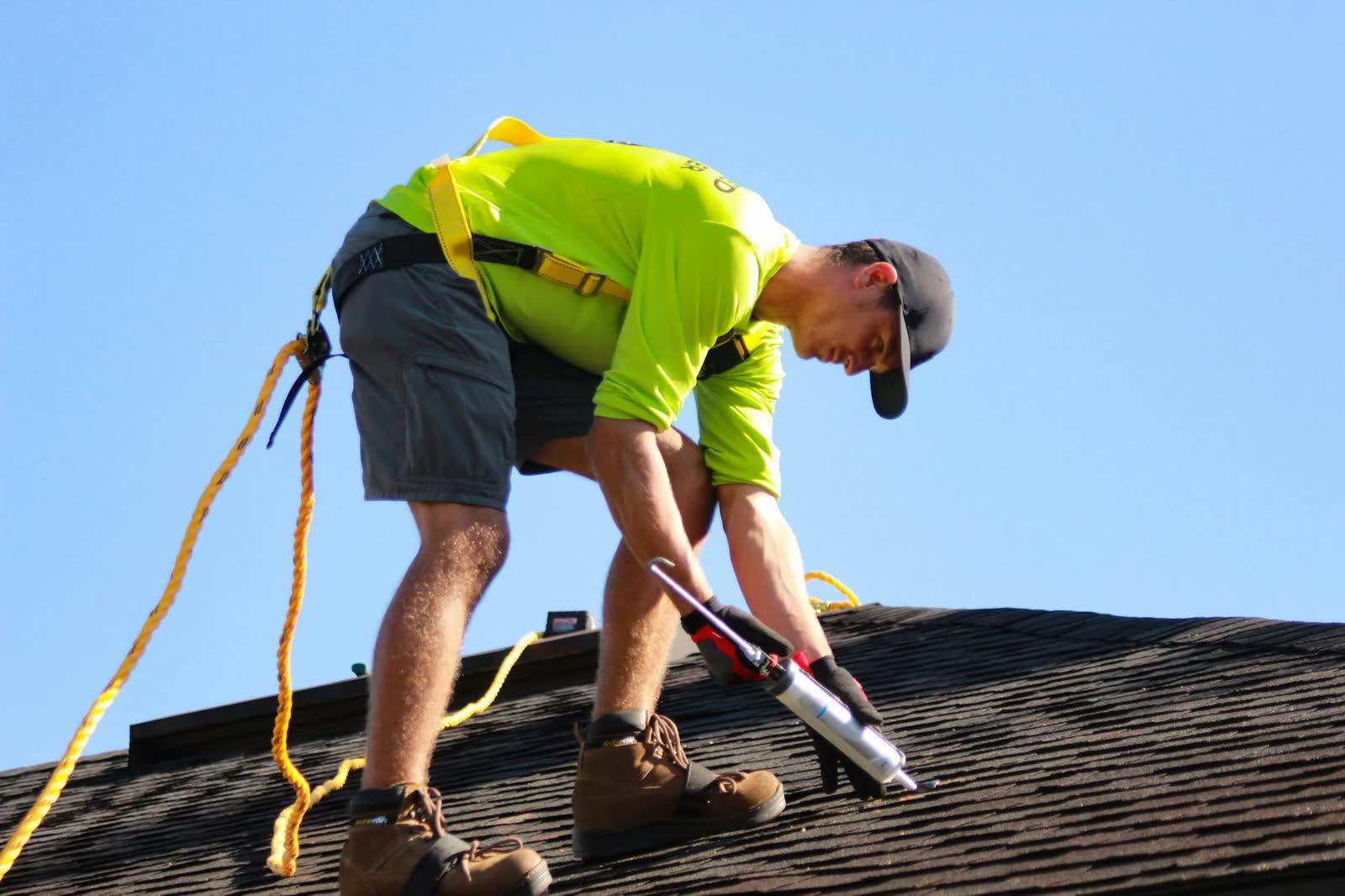
Quick answer: After a storm, homeowners call two or three roofers and book the first one who answers. A small business misses a large share of its calls (one often-cited study of 85 businesses found only 37.8% of inbound calls were answered), so the fix is not "answer the phone more". It is a system that texts back every missed call within seconds, answers after-hours calls with AI, books the inspection, and keeps following up on every estimate until the homeowner decides.
After a storm, the roofer who answers the phone gets the job. Not the best roofer. Not the cheapest. The one who picks up. Here is how a small crew can "pick up" every time, even from the top of a ladder.
Why do roofing companies lose so many storm leads?
Roofing has a demand problem most trades do not: it arrives in spikes. A hailstorm or high winds can turn a normal week into hundreds of calls in two days. Your crews are on roofs, your office is on other lines, and the calls that cannot get through go to voicemail.
Homeowners do not wait for voicemail callbacks. They go back to Google and call the next roofer. Research on lead response shows why that matters:
| Time to first contact | What the research shows |
|---|---|
| Within 5 minutes | About 8x more likely to qualify the lead than at 30 minutes (MIT / InsideSales) |
| First to respond | 35–50% of sales go to the business that responds first (InsideSales) |
| Typical company | Fewer than 1 in 10 companies respond within 5 minutes (LeadResponse) |
| Small business phones | Only 37.8% of inbound calls answered in a 2016 study of 85 businesses (411 Locals) |
The 411 Locals study is old and small, so treat it as a direction, not a precise number. But most roofing owners know the feeling: during a storm week, a lot of calls simply do not get answered.
What happens to a roofing lead that nobody answers?
Follow one lead through a busy week:
- A homeowner sees shingles in the yard and calls you at 6:40 pm. Nobody picks up.
- They leave a short voicemail, or more often, no voicemail at all.
- They call a second roofer, who also misses the call, and a third who answers.
- The third roofer books the inspection for tomorrow morning.
- Your office hears the voicemail the next day and calls back. The homeowner says they already have someone coming.
Nothing went wrong with your marketing. The lead came in. It was lost in the gap between the call and the callback.
How does missed-call text-back work for roofers?
Missed-call text-back is the simplest fix, and it pays for itself fastest. When a call to your business number is not answered, the system sends a text within seconds:
"Hi, this is Johnson Roofing. Sorry we missed your call! Are you calling about storm damage? Reply here and we'll get you booked for a free inspection."
That text does three things. It tells the homeowner you are real and responsive. It gives them an easy next step that does not involve calling again. And it keeps the conversation in writing, so your office can pick it up the moment they are free.
Should a roofing company use AI to answer calls?
For after-hours calls and storm spikes, AI call answering is worth considering. A voice agent can pick up every call, ask a short set of questions and book the inspection straight onto your calendar. What it should do is narrow and scripted:
- Greet the caller with your company name.
- Ask what happened (storm, leak, age of roof, insurance claim started or not).
- Take name, address, phone and best time.
- Offer inspection times or pass the call to a person.
What it should not do is give insurance-claim advice, promise that a claim will be approved, or quote job prices. Keep those conversations with your team. Also note that in the US, the FCC ruled in 2024 that AI-generated voices count as "artificial voice" under the TCPA (FCC 24-17), which is why AI calling should be used for inbound calls and consented callbacks, not cold outbound calls.
How do you follow up on roofing estimates that go quiet?
The second big leak in roofing is after the estimate. You spend an hour on the roof, send a detailed quote, follow up once, and never hear back. Often the homeowner is waiting on their insurance adjuster, getting other quotes, or just busy.
An automated follow-up sequence keeps you in front of them without anyone on your team having to remember:
- Day 1: "Here is your estimate. Any questions? Reply here."
- Day 3: A short note on what happens next and how long scheduling takes.
- Day 7: A check-in asking whether they heard back from their insurance company.
- Day 14 and 30: A friendly, low-pressure reminder with a direct booking link.
The sequence stops the moment they reply or book, so it never feels like spam.
Do you have to replace your roofing software?
No, and you probably should not. AccuLynx, JobNimbus, Roofr and ServiceTitan are built for estimates, production and job management. They are usually weaker at the first minute of a lead's life and at long-term follow-up.
The practical setup keeps your roofing software as the main record and adds a layer around it:
| Job | Where it lives |
|---|---|
| Missed-call text-back, instant replies | Automation layer (for example GoHighLevel) |
| AI call answering | Voice AI (GoHighLevel Voice AI or Retell) |
| Inspection booking and reminders | Calendar in the automation layer |
| Jobs, estimates, production | Your roofing software |
| Connecting the two | API, Zapier or Make, depending on your plan |
| Review requests | Automation layer, triggered when a job closes |
What about reviews?
After the job, ask for a Google review while the customer is happy. BrightLocal's 2026 survey found that 97% of consumers read reviews for local businesses and 74% look for reviews written in the last three months. A steady stream of recent reviews helps the next homeowner choose you when they search after the next storm.
What rules apply to texting homeowners?
Keep this simple and safe:
- Register your number. US business texting must go through a registered A2P 10DLC number, or carriers block it (Twilio).
- Every message needs an opt-out. "Reply STOP to opt out" and honor it everywhere.
- Watch state rules. Some states, such as Florida and Oklahoma, have stricter texting laws with quiet hours and message limits.
- Get consent language approved. Your web forms should say the homeowner agrees to be contacted by text. Your lawyer should approve the wording.
This is not legal advice. It is the checklist we build into every setup.
Key takeaways
- Storm leads go to the first roofer who responds, often within minutes.
- Missed-call text-back is the cheapest, fastest fix for calls that go to voicemail.
- AI answering helps after hours and in spikes, but keep it to inbound calls and a short, approved script.
- Estimate follow-up should be automatic and stop when the homeowner replies.
- Keep your roofing software. Add the response and follow-up layer around it.
Want to see how fast your company really replies? Our free speed-to-lead audit sends your business a test inquiry, times the reply, and sends you a short video with what we found. See how the full setup works on our roofing page, or read more about the 5-minute rule.
Related services
- AI Website Chatbot — Answer questions and capture leads on your site around the clock
- Local SEO & Google Business Profile — Get found by customers searching near you
- AI & Workflow Automation — Instant first replies, follow-ups and hand-offs that run without manual work
- See all ADbuddy services
POST
FAQ.
Common questions related to this article.